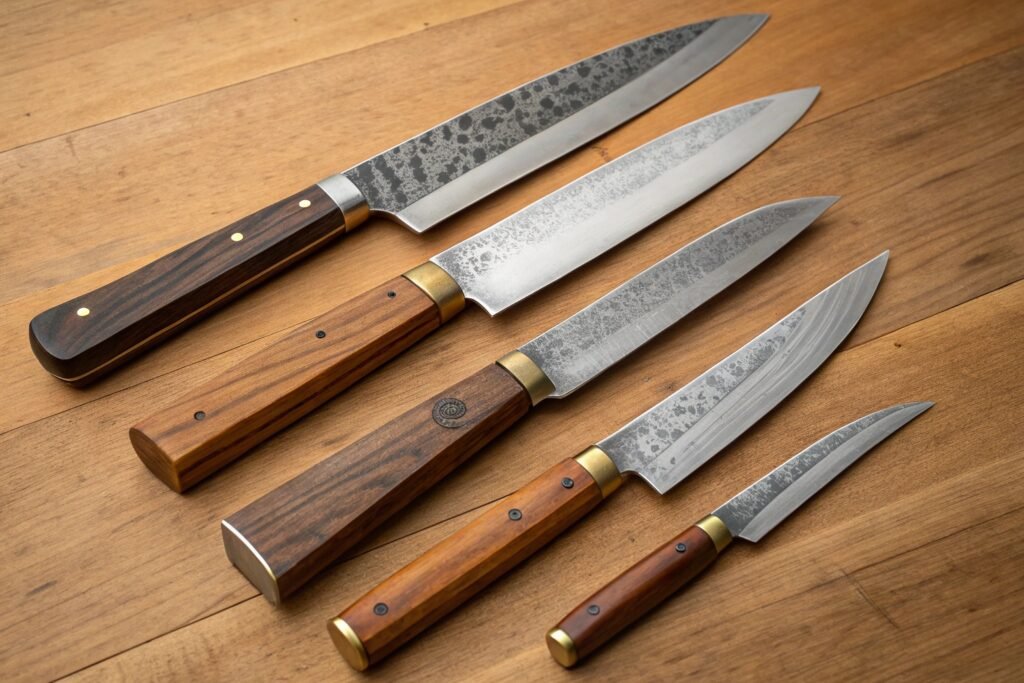
Why Investing in Quality Kitchen Knives Matters
The Difference a Sharp Knife Makes
Let’s be real—nothing kills your cooking vibe faster than a dull, clunky knife. A razor-sharp blade doesn’t just slice through tomatoes like butter—it also gives you more control, speed, and finesse. Whether you’re dicing onions or deboning a chicken, a high-quality knife feels like an extension of your hand.
From Prep Time to Presentation—Why Knives Are Everything
You don’t need a drawer full of gadgets when you’ve got the right knives. The right tools not only save time but elevate your entire culinary game. It’s not about being fancy—it’s about being efficient and effective.
What Makes a Kitchen Knife Truly “Great”?
Blade Material Matters
High-Carbon Steel vs. Stainless Steel
High-carbon steel blades are super sharp and hold their edge longer, but they need more maintenance. Stainless steel? More rust-resistant, but usually softer and dulls quicker. Some knives use a hybrid or clad material to balance both strengths.
Handle Comfort and Ergonomics
If you’re prepping for hours, your hand better not feel like it just did a gym workout. A good knife has a handle that fits like a glove—no slipping, no fatigue.
Balance and Weight Distribution
You want a knife that feels balanced, not blade-heavy or back-heavy. The right weight makes all the difference in precise slicing without wrist strain.
Edge Retention and Sharpening
No one wants to sharpen their knives every weekend. A quality blade stays sharp longer and sharpens more easily when the time comes.
Types of Kitchen Knives You Need in Your Arsenal
Chef’s Knife – The All-Purpose Powerhouse
Your go-to for nearly everything: chopping, dicing, slicing, even crushing garlic.
Santoku Knife – The Precision Slicer
Slightly shorter and lighter than a chef’s knife, perfect for thin slicing and precision cuts.
Paring Knife – For the Delicate Jobs
Perfect for trimming, peeling, and other detail work, this little tool is powerful.
Bread Knife – Slice Without Crushing
The serrated edge lets you glide through crusty loaves without turning them into crumbs.
Boning and Fillet Knives – For the Meat Lovers
Narrow, flexible blades that hug the bone and simplify and clean the process of preparing meat.
Utility Knife – The Underrated Workhorse
This mid-sized blade is ideal for sandwich slicing and other small chopping jobs.
Top 08 Kitchen Knives That Slice Through Anything (Including Your Grocery Bill)
1. Wüsthof Classic 8-Inch Chef’s Knife
German precision meets timeless design. This one’s a staple in pro kitchens everywhere.
2. Shun Classic 8-Inch Chef’s Knife
Handcrafted Japanese beauty, sharp as a samurai sword. VG-MAX steel, layered Damascus.
3. Victorinox Fibrox Pro Chef’s Knife
Budget-friendly but surprisingly effective. NSF-approved and comfortable grip.
4. Dalstrong Gladiator Series
A stylish beast. Strong, bold, and made with high-carbon German steel.
5. Zwilling J.A. Henckels Pro
Durable and ultra-sharp—perfect for both beginners and pros.
6. Tojiro DP Gyuto
High performance without breaking the bank. Razor sharp, durable VG-10 core.
7. Mercer Culinary Genesis Knife
Professional-level quality at a home-cook price. Textured grip for safety.
8. Miyabi Birchwood Chef’s Knife
A piece of art. 101-layer Damascus steel with a birchwood handle. Pure slicing luxury.
Honorable Mentions for Budget-Conscious Home Cooks
Cuisinart 15-Piece Stainless Steel Set
Elegant, reasonably priced, and ideal for college students or novice cooks.
Imarku Japanese Chef Knife
Elegant design, solid performance, and often under $50—what’s not to love?
How to Pick the Best Knife for Your Purpose
Home Cook vs. Professional Chef – What’s the Difference?
Making a great stir-fry doesn’t require a $300 knife. Match your knife to your frequency and intensity of cooking.
What to Look for When Buying a Knife
Focus on grip, weight, balance, and blade material. A knife isn’t good unless it’s comfortable to hold.
Don’t Fall for Gimmicks—Focus on Function
Avoid knives with odd shapes, gaudy coatings, or needless holes. Keep it classic, keep it sharp.
Caring for Your Kitchen Knives
Proper Storage Tips
Make use of blade guards, a magnetic strip, or a knife block. Knives thrown in a drawer cause immediate harm.
Honing vs. Sharpening
Honing realigns the edge; sharpening grinds it down. Honing should be weekly, sharpening every few months.
Cleaning Do’s and Don’ts
Hand wash only! Dishwashers destroy blades. Dry immediately to prevent rust.
Knife Accessories That Make a Huge Difference
Honing Rods
Keep your knife edge aligned and performance-ready.
Sharpening Stones
For the perfect edge, nothing beats a quality whetstone and some practice.
Knife Blocks and Magnetic Strips
Organized, accessible, and safe storage is key for longevity and safety.
Final Thoughts – Upgrade Like a Pro
A good knife can transform your cooking and even inspire you to cook more. Whether you’re a home cook or prepping for a dinner party, investing in a few high-quality knives will save time, reduce stress, and make your meals taste better. Cut the frustration, not your fingers.
FAQs
Q1: How frequently should my kitchen knives be sharpened?
A: Depending on use, about every 3–6 months. Hone weekly to keep the edge aligned.
Q2: Are expensive knives really worth it?
A: Yes—if you cook often. Over time, they save money, perform better, and last longer.
Q3: What’s better: forged or stamped knives?
A: Forged knives are stronger and more balanced. Stamped knives are lighter and cheaper.
Q4: Can I put my knives in the dishwasher?
A: Never! It dulls the blade and can cause rusting. Hand wash only.
Q5: What’s the best knife for beginners?
A: The Victorinox Fibrox Pro Chef’s Knife—it’s affordable, sharp, and easy to handle.