What is Daylight Savings?
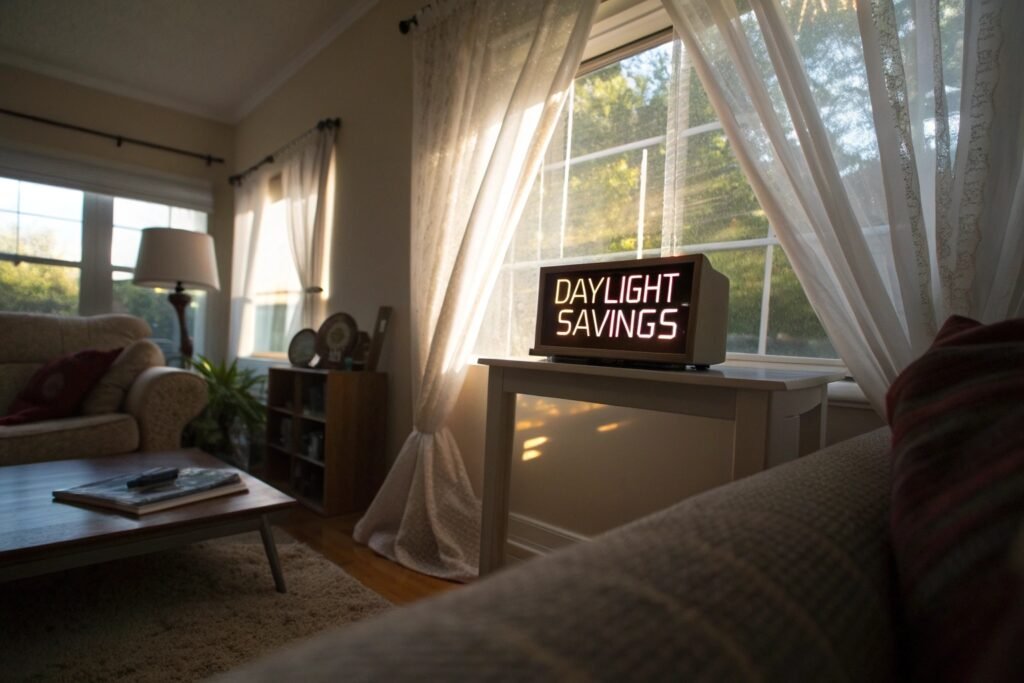
Introduction to Daylight Savings
Ever wondered why, twice a year, your clock suddenly jumps an hour forward or back? That’s
Daylight Savings Time (DST) in action. It’s a system designed to make better use of daylight
during the longer days of the year.
The Concept Behind Daylight Savings
The main idea is simple: shift an hour of daylight from the morning to the evening. That way,
people can enjoy more sunlight after work or school, instead of having that precious daylight
wasted early in the morning.
A Quick History of Daylight Savings
Believe it or not, the idea of daylight savings dates back to the 18th century. Noted polymath
Benjamin Franklin once humorously proposed that rising with the sun could reduce
candle usage, but daylight saving time wasn’t officially adopted for energy conservation
until the First World War. Today, its use is widespread — but not without controversy.
Why Do We Use Daylight Savings?
Energy Conservation Goals
One of the original arguments for DST was to save energy. Moving daylight later into the day
reduces the need for artificial lighting and lowers energy consumption for heating. While
this made sense decades ago, with modern appliances and lifestyles, the energy savings are
debatable.
Improving Daylight Utilization
Who doesn’t love enjoying longer evenings? DST gives people more time after work or school
to spend outdoors, exercise, or run errands during daylight.
The Economic Perspective
Certain sectors, such as hospitality and recreation, see economic advantages from
extended daylight hours under DST. Longer evenings mean more people go shopping, eat
out, or participate in outdoor activities.
Social and Health Impacts

It’s not all sunshine, though. DST can disrupt sleep patterns and even lead to health problems
like increased heart attacks right after the time change. The shift may also impact mental health,
especially in those sensitive to sleep disruptions.
How Daylight Savings Works
Spring Forward – Losing an Hour
When daylight saving time begins in spring, clocks jump forward sixty minutes, stealing
an hour of rest but gifting us extended evening sunlight.
Fall Back – Gaining an Hour
In the fall, we “fall back,” setting clocks back by an hour. You get that glorious extra hour of
sleep — but it also signals shorter, darker evenings.
The Role of Clocks and Technology
Thankfully, most smartphones and digital devices update automatically. But don’t forget to
change those manual wall clocks, car dashboards, and good old-fashioned alarm clocks.
Countries That Observe Daylight Savings
United States and Canada

Most parts of the U.S. and Canada observe DST. However, some regions like Arizona and parts
of Saskatchewan opt out.
European Countries
Europe uses DST, known as “Summer Time,” across most countries. But debates continue
about whether to keep it, with some EU nations pushing for permanent standard time.
Other Regions That Participate
Several countries in South America, Oceania, and the Middle East also use DST — though the
start and end dates can vary widely.
Countries That Do Not Observe Daylight Savings
Many countries, especially near the equator, don’t observe DST. They simply don’t experience
enough variation in daylight throughout the year to make it worthwhile.
Pros and Cons of Daylight Savings
Advantages of Daylight Savings
Extended Evening Daylight
More sunlight after work means more time for outdoor activities, exercise, and socializing.
Reduced Energy Consumption
Though debated, some studies suggest DST slightly reduces electricity use, especially for
lighting.
Positive Economic Effects

Longer evenings often mean more shopping, dining, and recreational activities, boosting local
economies.
Disadvantages of Daylight Savings
Sleep Disruption
The time changes can mess with your sleep schedule, leaving you feeling groggy and tired.
Health Risks
Studies have shown an increase in heart attacks, strokes, and traffic accidents immediately after
the spring time change.
Questionable Energy Savings
Modern research questions whether DST actually saves much energy, considering heating,
cooling, and electronic device use.
Common Myths About Daylight Savings
Myth: Farmers Wanted Daylight Savings
Actually, most farmers oppose DST. The time change disrupts their schedules, especially those
tied to natural daylight cycles.
Myth: It Saves a Lot of Energy
While this was once true, modern studies show energy savings from DST are minimal or
non-existent in many places.
Myth: Every Country Uses It
Far from it! In fact, most countries near the equator don’t bother with DST at all.
The Future of Daylight Savings
Movements to Abolish Daylight Savings
More and more people and politicians are questioning DST’s usefulness. Some U.S. states and
countries are considering abolishing it altogether.
Scientific and Public Debates
Scientists are split — some argue for permanent DST to enjoy more daylight, while others
suggest sticking to standard time to avoid sleep disruptions.
Permanent Daylight Savings – A Good Idea?
It sounds great to have endless summer evenings, but permanent DST could mean very dark
winter mornings — making it tough for kids and workers alike.
Conclusion
Daylight Savings is one of those things we often accept without thinking. But it has a fascinating
history, real-world effects, and plenty of debate surrounding it. Whether you love those long
summer evenings or dread losing an hour of sleep, DST impacts our lives — even if it’s just
twice a year. As science and public opinion evolve, the future of Daylight Savings remains
uncertain. Will we keep springing forward and falling back? Only time will tell.
FAQs About Daylight Savings
When Does Daylight Savings Start and End?
In most places, DST starts in the spring (March or April) and ends in the fall (October or
November), but exact dates vary by country.
Does Every U.S. State Observe It?
No. States like Hawaii and most of Arizona opt out of DST entirely.
Does Daylight Savings Affect Your Health?
Yes. The time change can disrupt sleep patterns, leading to fatigue, reduced productivity, and
even higher risks of heart problems in some cases.
Why Do Some Countries Not Follow It?
Many equatorial countries experience little variation in daylight year-round, so DST doesn’t
provide benefits there
Will Daylight Savings Ever Be Abolished?
It’s possible. Several countries and U.S. states are actively debating or passing laws to abolish
DST, but nothing is universally settled yet.