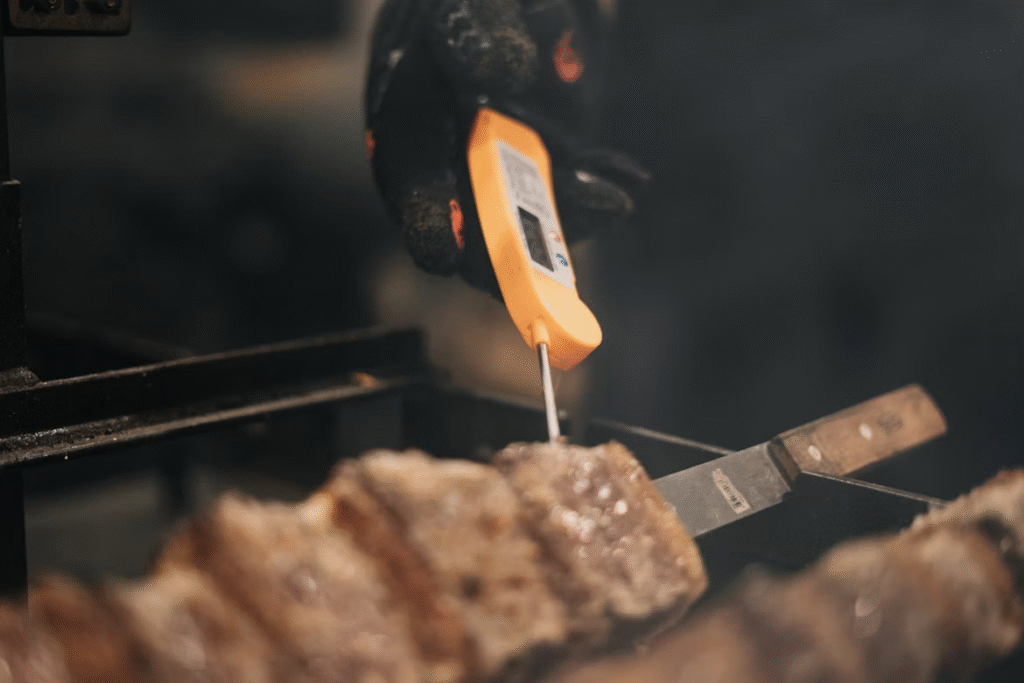
The Problem with Guesswork in Cooking
Let’s be real — we’ve all poked at a steak, sliced into a chicken breast mid-cook, or even relied on that gut feeling to say, “Yup, looks done.” But let’s face it, guessing leads to dry turkey, rubbery pork, or worse… undercooked chicken. Not only does that ruin dinner, but it can also put your health at risk.
If you’ve ever wished for a way to cook meat perfectly every single time — you’re in for a treat. One simple tool changes everything: the meat thermometer.
What is a Meat Thermometer?
At its core, a meat thermometer is a device used to measure the internal temperature of your food — especially meat, poultry, and fish — to ensure it’s safely and properly cooked.
Types of Meat Thermometers:
- Dial And Analog Thermometers – are outdated, dependable, and slow.
- Digital Instant-Read Thermometers – Quick, accurate, and easy to use.
- Probe Thermometers – Stay-in probes monitor your food while it cooks in the oven or on the grill.
- Smart Thermometers – Connected via Bluetooth or Wi-Fi to your phone for real-time alerts.
Each has its strengths, but even the most basic one is better than guessing.
The Main Benefits of Using a Meat Thermometer
✅ Perfect Doneness Every Time
Whether you’re aiming for rare, medium, or well-done, a thermometer takes the guesswork out. No more slicing into meat and losing those flavorful juices.
✅ Enhanced Food Safety
According to the CDC, undercooked meat is a leading cause of foodborne illness. A thermometer ensures your chicken hits the safe 165°F — not 160°F, not 180°F.
✅ Consistency is King
Want your famous steak to turn out the same every time? Thermometers make that repeatable magic happen.
✅ Saves Time & Reduces Waste
No more overcooking “just to be safe.” You’ll save money by not tossing out dried-up roasts or reheating undercooked chicken.
How Guessing Ruins Your Food
Think you’ve got a sixth sense for doneness? Let’s break it down:
Overcooked Meat
It’s dry. It’s chewy. And it tastes like disappointment.
Undercooked Meat
That “just pink” burger might still harbor harmful bacteria. You don’t want that kind of excitement.
Uneven Cooking
Guessing leads to raw centers and burnt edges — a sure way to upset your guests.
Cooking Meat to the Right Temperature
Let’s talk specifics:
USDA Safe Temperatures:
- Chicken & Turkey: 165°F
- Ground Beef & Pork: 160°F
- Steaks and roasts of beef, lamb, and pork: 145°F (with a 3-minute rest)
- Fish: 145°F
Why It Matters:
These numbers aren’t random — they’re based on killing off harmful bacteria.
Carryover Cooking
Remove meat just before the target temp. It keeps cooking as it rests — this is where the pros shine.
Using a Meat Thermometer Like a Pro
Insert in the Thickest Part
Avoid bones or fat — those give false readings.
Wait for the Reading
Don’t rush it. Let it stabilize. Instant-read doesn’t mean “immediate” — give it a few seconds.
Clean After Each Use
Especially with raw poultry — you don’t want to cross-contaminate.
Digital vs. Analog: Which One Wins?
Analog Thermometers
Pros: No batteries. Durable.
Cons: Slower, harder to read.
Digital Thermometers
Pros: Fast, accurate, easy to read, often have backlight.
Cons: Needs batteries or charging.
For most home cooks, a good digital thermometer is a game-changer.
Features to Look For in a Quality Thermometer
- Speed (2–3 seconds read time)
- Accuracy (±1°F is ideal)
- Backlit Display
- Auto-shutoff
- Waterproof Design
- Bluetooth or Wi-Fi Connectivity (optional)
Invest once, and you’ll use it forever.
Top Scenarios Where It Shines
- Roasting a Thanksgiving Turkey – Don’t serve salmonella this holiday.
- Grilling Steaks – Hit medium-rare with confidence.
- Smoking Brisket – Low-and-slow demands precise temps.
- Baking – Check internal temp on banana bread or cheesecake.
Meat Thermometers Beyond Meat
Surprise — they’re not just for meat.
- Candy Making – Sugar syrup is all about temp.
- Bread Baking – Hollow thump? Nope, go for 190°F–210°F.
- Frying – Monitor oil so your food doesn’t burn or get greasy.
- Yogurt Making – Perfect temps for culturing.
Real-Life Testimonials
“Before I got a thermometer, I ruined every roast I touched. Game-changer.” — Sarah M., Home Cook
“I used to overcook burgers like crazy. Now? Juicy every time.” — Mike R., Grillmaster
“Best $25 I ever spent.” — Angela C., Busy Mom
Buy Best Meat Thermometer At Amazon
Busting Meat Thermometer Myths
“Real Chefs Don’t Use Them”
Actually, they do — especially in high-end kitchens.
“I Can Tell by Touch”
You might be close, but why guess when you can know?
“They’re Only for Big Meals”
Nope. Burgers, chicken breasts, even fish fillets benefit.
Affordable and Worth It
You can grab a reliable digital thermometer for $15–$25. Premium models go up to $100, but you don’t need to splurge to start seeing results.
The Smart Kitchen Future
New thermometers sync with your phone and even alert you when it’s time to flip or rest the meat. Welcome to the future of cooking.
Conclusion: Stop Guessing, Start Cooking with Confidence
There’s no pride in guessing wrong. A meat thermometer is the simplest tool that will instantly upgrade your cooking. From juicy steaks to food-safe chicken, you’ll cook like a pro — every time. It’s small, affordable, and powerful. So stop speculating and cook with assurance.
FAQs
1. Can I leave the thermometer in the oven?
Only if it’s an oven-safe probe thermometer. It is not advisable to leave instant-read types in while cooking.
2. Are meat thermometers dishwasher-safe?
Most are not. Always hand wash — especially digital models — unless the packaging says otherwise.
3. What’s the best thermometer for grilling?
A digital instant-read or a leave-in probe thermometer with a long cable works best for grilling.
4. Do I need different thermometers for meat and baking?
You can use one for both — just make sure to clean it well between uses.
5. How frequently should my meat thermometer be calibrated?
Check calibration every few months. Most digital thermometers have a calibration function or can be tested using boiling water.