
Introduction
Why Your Refrigerator Matters More Than You Think
Your fridge runs 24/7 — no breaks, no days off. That means it can quietly rack up your electricity bill without you even noticing. In fact, refrigerators are among the top energy consumers in most homes. So, choosing an energy-efficient model isn’t just about being “green” — it’s about being smart with your money.
The Hidden Costs of Old Fridges
Still using that 15-year-old fridge in the garage? You might be paying more than you realize. Old models often lack modern insulation, rely on inefficient compressors, and use outdated refrigerants that harm the environment. Swapping it out for a modern, eco-friendly refrigerator can slash your utility bills and carbon footprint instantly.
What Makes a Refrigerator Eco-Friendly?
Energy Efficiency Ratings Explained
Look for that EnergyGuide label — it’s your fridge’s report card. The Energy Star certification, backed by the U.S. EPA, means the appliance meets or exceeds federal standards for efficiency. The lower the kWh per year, the better!
Inverter Compressors vs Conventional Compressors
Traditional compressors operate like a light switch: on or off. Inverter compressors, on the other hand, adjust their speed based on demand, using significantly less energy.This technology also makes them quieter and longer-lasting.
Environmentally Friendly Refrigerants
Older fridges often use harmful HFCs (hydrofluorocarbons). Eco-friendly fridges now utilize R-600a or other low-GWP (Global Warming Potential) refrigerants that are safer for the ozone and your home.
Benefits of Using Eco-Friendly Refrigerators
Save Money on Your Utility Bills
Switching to an energy-efficient fridge can cut your electricity costs by $100 or more per year. Over a decade, that’s a free vacation.
Reduce Your Carbon Footprint
An eco-friendly fridge emits less CO₂, helping fight climate change from your kitchen. It’s a small step with big impact.
Improve Kitchen Air Quality
Modern refrigerators with sealed insulation and advanced filters help keep odors and mold at bay, ensuring your kitchen stays fresh.
Important Qualities of an Eco-Friendly Refrigerator
Energy Star Certification
Always your first checkpoint. If it doesn’t have Energy Star, don’t even consider it.
Smart Sensors and Temperature Control
These automatically adjust cooling based on usage and ambient conditions, optimizing energy consumption.
LED Lighting
Not only does it last longer, but it also uses a fraction of the energy of incandescent bulbs — and it looks sleek too.
Insulation Quality
High-density insulation means your fridge holds its chill longer, even during power outages.
Best Eco-Friendly Refrigerator Brands in 2025
LG – Leader in Smart, Green Tech
LG, which is well-known for its Inverter compressors and InstaViewTM panels, strikes the ideal balance between efficiency and luxury.
Samsung – Eco and Innovation Combined
Samsung’s Bespoke line offers customizable style and superior energy ratings. Plus, Wi-Fi connected models let you monitor energy usage in real-time.
Whirlpool – Durability Meets Sustainability
With adaptive defrost and Accu-Chill™ tech, Whirlpool models are a perfect pick for budget-conscious eco-warriors.
Bosch – German Engineering for Efficiency
Bosch fridges shine with sleek design, premium build, and stellar efficiency ratings — the BMW of the fridge world.
Top 5 Eco-Friendly Refrigerators Worth Buying
1. EUHOMY 7.4Cu.Ft. Refrigerator with Freezer
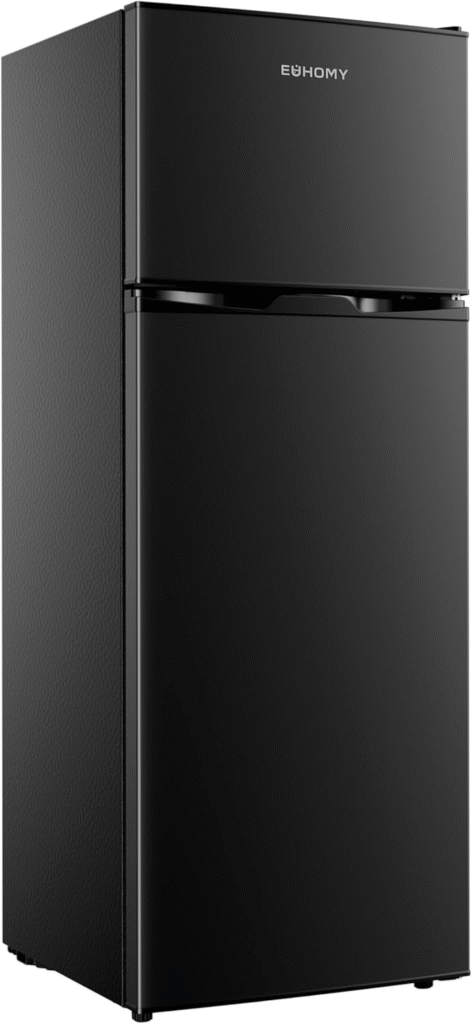
| Capacity | 7.4 Cubic Feet |
| Configuration | Compact Freezer-on-Top |
| Color | Black |
| Special Feature | Adjustable Shelves |
| Installation Type | Freestanding |
| Number of Doors | 2 |
| Defrost System | Manual |
| Voltage | 115 Volts |
2. Refrigerator with Freezer, 3.5 Cu.Ft Mini Fridge
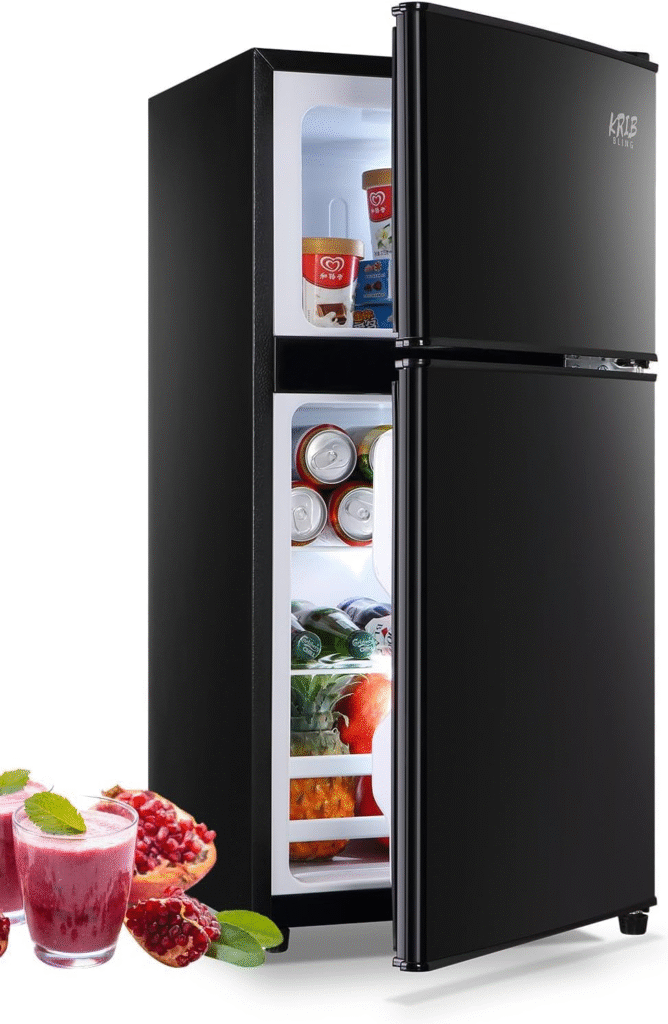
| Product Dimensions | 17.52″D x 16.7″W x 34.18″H |
| Brand | KRIB BLING |
| Capacity | 3.5 Cubic Feet |
| Configuration | Freezer-on-Top |
| Color | Black |
| Special Feature | Quiet |
| Installation Type | Freestanding |
| Number of Doors | 2 |
| Defrost System | Manual |
| Voltage | 120 Volts (AC) |
3. Antarctic Star 24 Inch Weather Proof Stainless Steel Outdoor Beverage Refrigerator
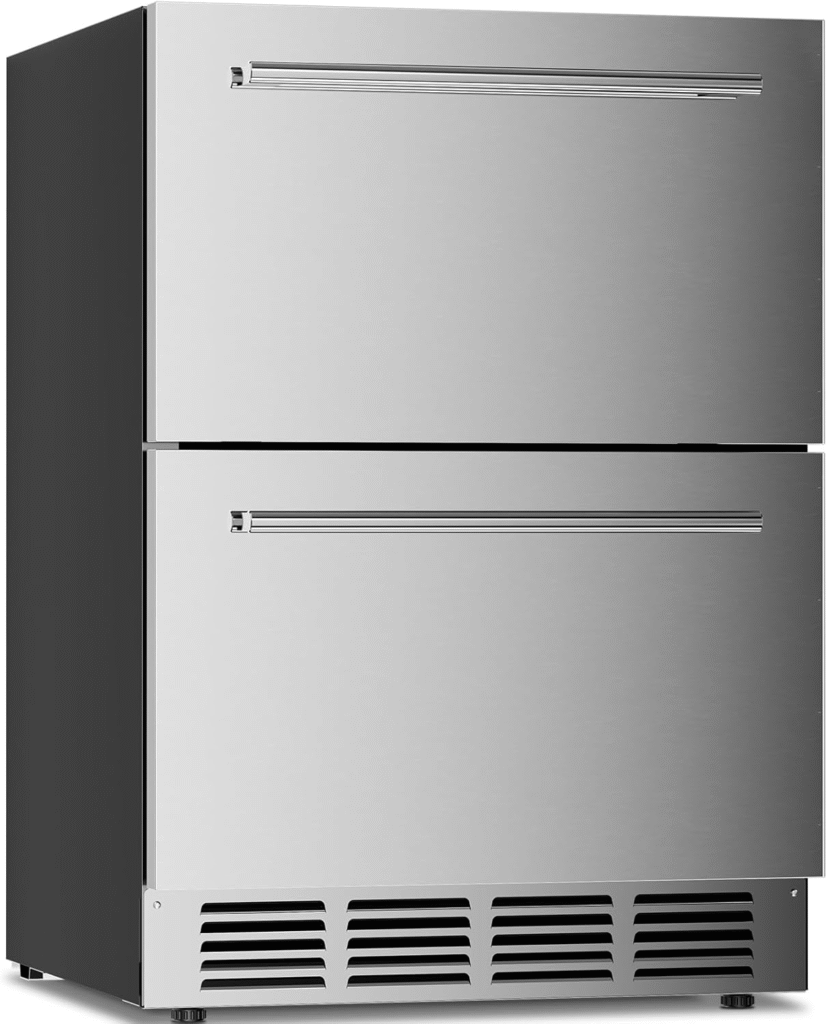
| Capacity | 5 Cubic Feet |
| Configuration | beverage-cooler-refrigerators |
| Color | Silver |
| Special Feature | Quiet |
| Installation Type | Freestanding |
| Number of Doors | 2 |
| Defrost System | Manual |
| Voltage | 115 Volts |
4. Tylza Outdoor Refrigerator 24 Inch Wide, Stainless Steel Beverage Refrigerator
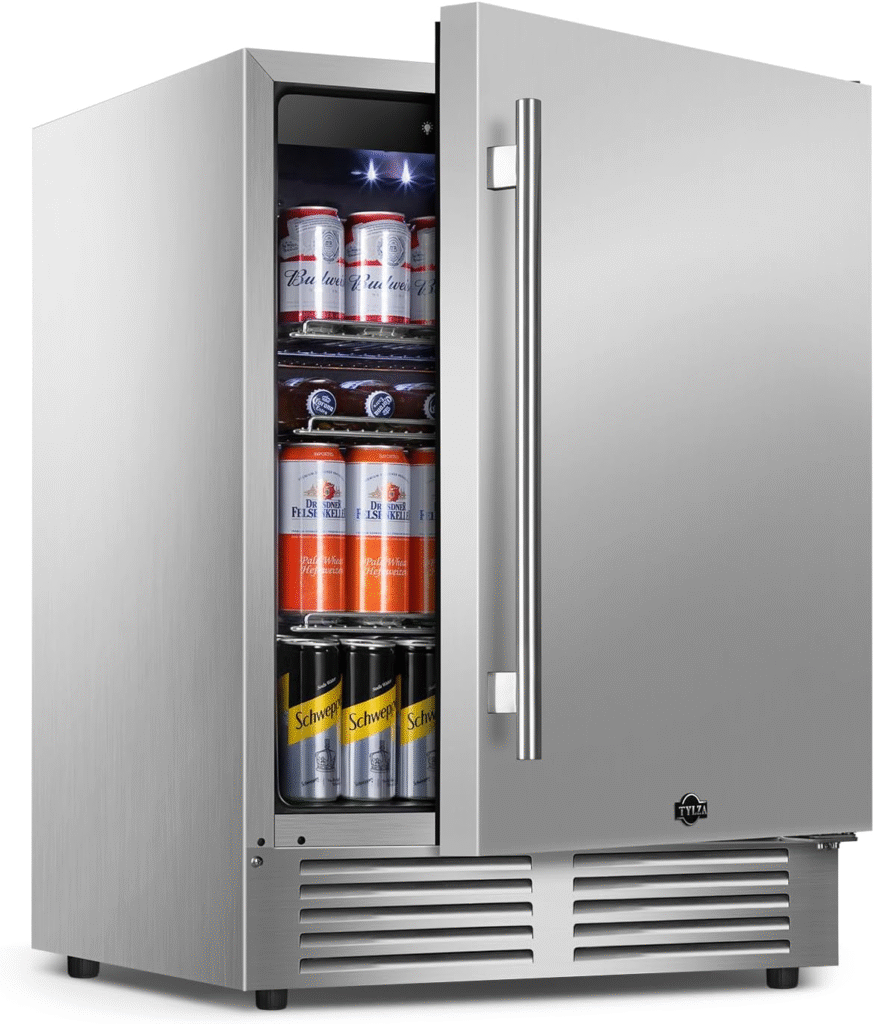
| Capacity | 4.9 Cubic Feet |
| Configuration | Freezerless |
| BEE Star Rating | no |
| Color | White Stainless Steel |
| Special Feature | Adjustable Shelves; Digital Temperature Control; Energy Efficient; Front Ventilation; Inverter Compressor; Large Capacity; LED Display; Low Noise; Scratch Resistant; Touch ControlAdjustable Shelves; Digital Temperature Control; Energy Efficient; Front Ventilation; Inverter Compressor; Large Capacity; LED Display |
| Installation Type | Built-In/Undercounter/Freestanding |
| Number of Doors | 1 |
| Defrost System | Automatic |
5. EUHOMY Mini Fridge with Freezer, 3.2 Cu.Ft Mini Refrigerator

| Capacity | 3.2 Cubic Feet |
| Configuration | Freezer-on-Top |
| Color | Black |
| Special Feature | Dual Zone Cooling, Compact |
| Installation Type | Freestanding |
| Number of Doors | 2 |
| Defrost System | Manual |
| Voltage | 115 |
Tips to Make Your Fridge Even More Energy-Efficient
Set the Right Temperature
For the refrigerator, aim for 37°F (3°C), and for the freezer, 0°F (-18°C). Too cold = wasted energy.
Keep It Full — But Not Too Full
A fuller fridge retains cold better, but don’t block air vents or overcrowd shelves.
Clean the Coils Regularly
Dusty coils make your fridge work harder. Clean them every 6–12 months to keep things efficient.
Let Hot Food Cool Before Storing
Hot food raises the internal temperature, forcing the fridge to overwork. Let leftovers cool down first.
Common Myths About Energy-Saving Refrigerators
They’re Too Expensive
While upfront costs can be higher, energy savings over time often outweigh the price difference — and many utilities offer rebates.
They Don’t Perform Well
Today’s eco-friendly fridges perform just as well, if not better, thanks to advanced compressors and smart features.
They’re Hard to Maintain
Modern units are designed with low-maintenance in mind. Set it, forget it, and save.
How to Recycle Your Old Refrigerator Responsibly
Manufacturer Take-Back Programs
Brands like LG, Samsung, and GE offer haul-away programs that ensure safe disposal.
Local Recycling Centers
Many cities have recycling centers that accept large appliances and extract valuable materials like copper and aluminum.
Avoiding Hazardous Waste Dumping
Chemicals found in old refrigerators have the potential to leak if not disposed of appropriately. Always recycle responsibly to protect the planet.
Conclusion
Upgrading to an eco-friendly refrigerator isn’t just about being trendy — it’s a long-term investment in your home, your wallet, and the planet. With energy costs rising and environmental concerns growing, there’s never been a better time to make the switch. Choose smart. Choose green. And stop wasting energy — starting today.
FAQs
Q1: Which eco-friendly refrigerator size is ideal for a family?
A 20–25 cubic foot fridge typically suits a family of 4. Look for models that balance size with Energy Star ratings.
Q2: Can I make my current fridge more energy-efficient?
Yes! Clean the coils, keep the door seals tight, and avoid overstuffing it. But upgrading is still the best solution long-term.
Q3: How long do eco-friendly refrigerators last?
Most last 10–15 years. Inverter models often last longer due to less wear on the compressor.
Q4: Are there government rebates for energy-efficient appliances?
Yes, there are a lot of federal and local programs that provide tax incentives or rebates. Check EnergyStar.gov for details.
Q5: Which temperature is ideal for energy efficiency?
Maintain a 37°F refrigerator and a 0°F freezer. These are optimal for food safety and energy use.