🔥 Introduction
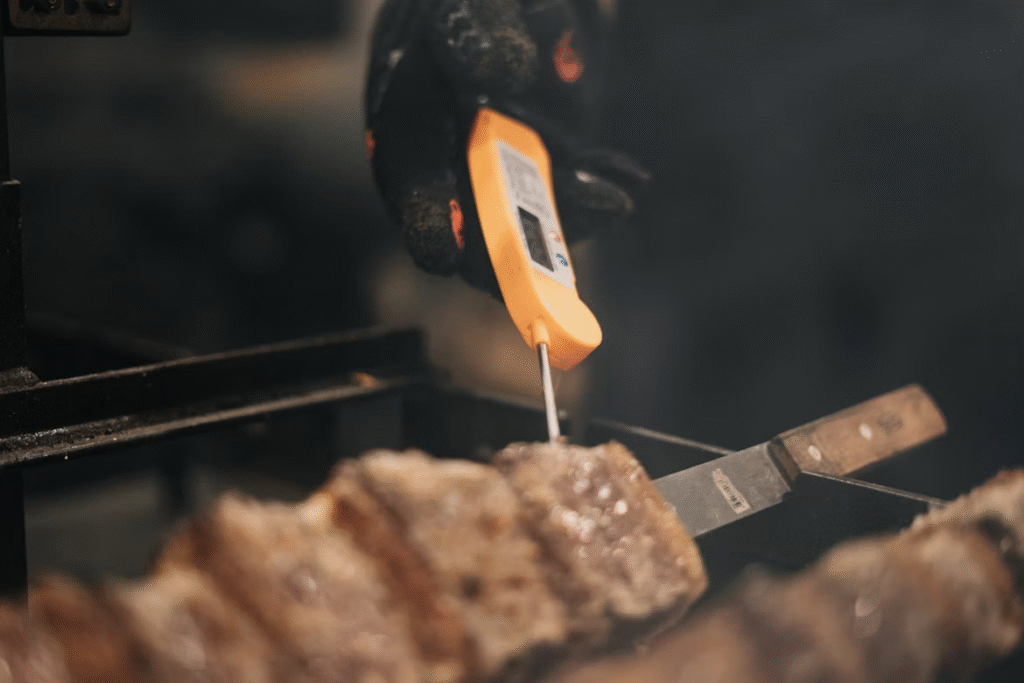
Let’s be honest—nothing kills a backyard BBQ vibe faster than dry chicken, rubbery steak, or overdone burgers. You’re not the only person who has ever “eyeballed it” and wished for the best. The simple meat thermometer, however, is a secret weapon that every grill master possesses.
It’s not just for chefs in white coats or competition BBQers—it’s your ticket to perfectly cooked meat every single time. In this guide, we’re going to break down how to use a meat thermometer like a seasoned pro, so your next cookout is the stuff of legend.
🍖 What Is a Meat Thermometer?
Basic Definition and Purpose
A straightforward instrument for determining the internal temperature of meat, poultry, and even fish is a meat thermometer. It tells you exactly when your food hits the safe—and tasty—temperature zone.
Types of Meat Thermometers
- Instant-read: Gives a quick read in seconds.
- Leave-in/probe: Stays in the meat during cooking.
- Wireless smart: Connects to your phone or grill monitor.
- Analog: Old school dial face.
- Digital: Fast, easy-to-read screen.
🔥 Why Every Grill Master Needs a Meat Thermometer
Ensuring Food Safety
No one wants to serve up food that’s undercooked and potentially dangerous. Chicken, pork, and ground beef must hit certain temps to kill bacteria like salmonella and E. coli.
Achieving Perfect Doneness Every Time
Whether you’re going for medium-rare or well-done, temperature—not guesswork—is the key to consistency.
Avoiding Overcooked Disasters
You spent good money on that ribeye. Don’t ruin it by drying it out! Thermometers help you pull it off at just the right moment.
🔍 Types of Meat Thermometers Explained
Instant-Read Thermometers
Quick, reliable, and easy to use. Ideal for checking temps right before serving.
Leave-In/Meat Probe Thermometers
Perfect for slow-cooking or smoking. Put it in, close the lid, and let it do its thing.
Wireless Smart Thermometers
Tech-savvy tools that let you monitor from your phone. Great for multitasking.
Analog vs. Digital Thermometers
Analog thermometers are basic but reliable. Digital ones can be read more quickly and easily.
🧑🍳 How to Use a Meat Thermometer Like a Pro
Step-by-Step Guide
- Place the probe into the meat’s thickest area.
- Avoid touching bone or fat.
- Wait until the reading stabilizes.
- Remove and clean after use.
Finding the Right Spot
Always aim for the center, especially with thick cuts. For poultry, the inner thigh is key.
Calibrating Your Thermometer
Even thermometers need a tune-up.
The Ice Water Test
- Fill a glass with ice and water.
- Insert the thermometer—it should read 32°F (0°C).
The Boiling Water Test
- Boil water and insert the probe.
- It should read 212°F (100°C) at sea level.
🌡️ Temperature Guidelines for Different Meats
Beef and Lamb
- Rare: 120–125°F
- Medium-rare: 130–135°F
- Medium: 140–145°F
- Well-done: 160°F+
Chicken and Turkey
- Always 165°F
Pork
- Safe at 145°F with 3-minute rest
Fish
- 125–130°F for moist, flaky texture
🔥 Pro Tips for Using a Meat Thermometer
Avoiding Bone Contact
Bones can provide erroneous readings because they conduct heat more quickly.
Resting Meat and Carryover Cooking
Remove meat a few degrees early—it’ll rise in temp while resting.
Cleaning and Maintaining Your Thermometer
After each use, wash the probe with hot, soapy water. Sanitize regularly.
🚫 Common Mistakes to Avoid
Guessing Without Checking
Looks can deceive. Even a browned crust doesn’t mean it’s done.
Not Letting the Thermometer Stabilize
Wait a few seconds for an accurate reading.
Relying Solely on Appearance or Time
Forget the old “cut and peek” test—temps tell the real story.
🏆 Best Meat Thermometers in 2025
Top-Rated Instant-Read: ThermoWorks Thermapen ONE
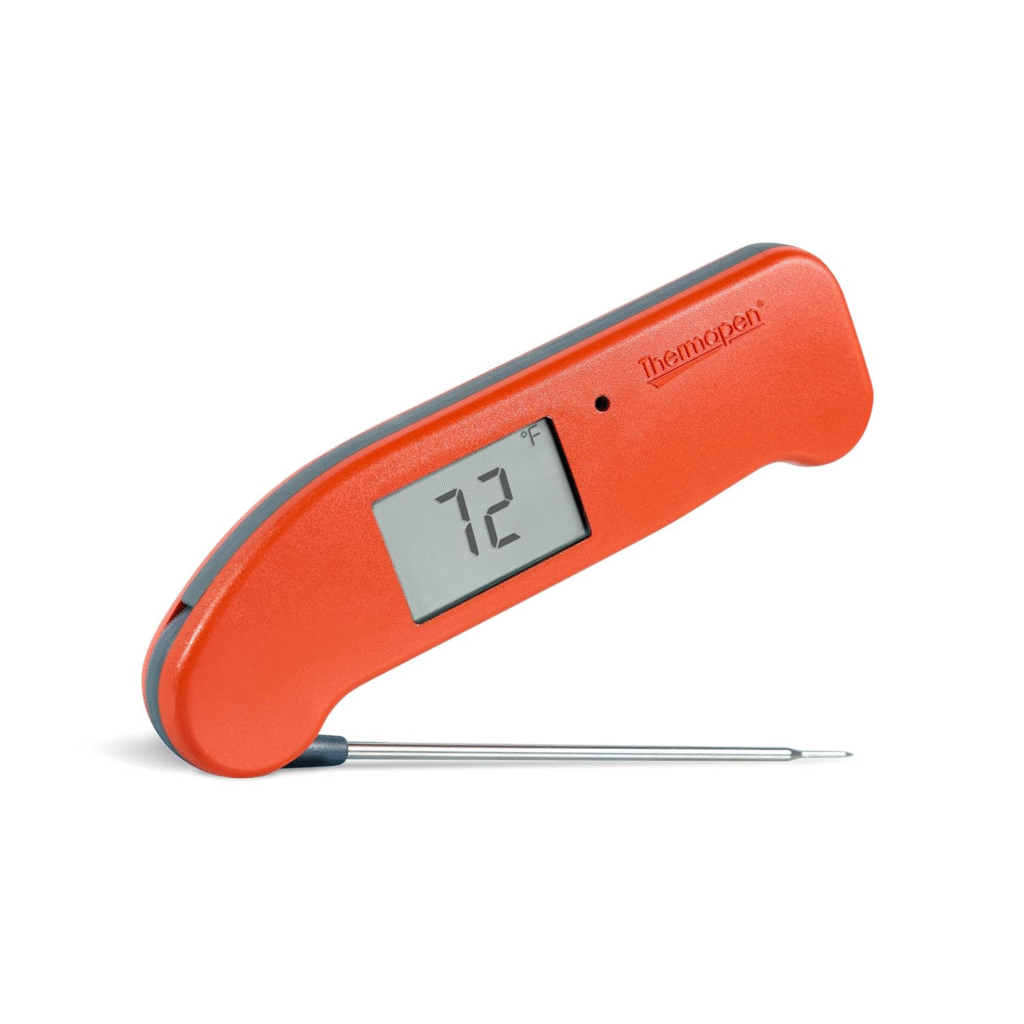
| Brand | ThermoWorks |
| Special Feature | Fast Reading System |
| Color | Cayenne Pepper Red |
| Age Range (Description) | Adult |
| Included Components | NIST-traceable calibration certificate |
| Outer Material | Acrylonitrile Butadiene Styrene |
| Specification Met | Nsf, Ce, Rohs, Ukca Certified for Commercial Use |
| Display Type | LCD Screen |
| Product Care Instructions | Hand Wash Only |
| Unit Count | 1.0 Count |
Blazing fast and super accurate.
Best Wireless: MEATER Plus
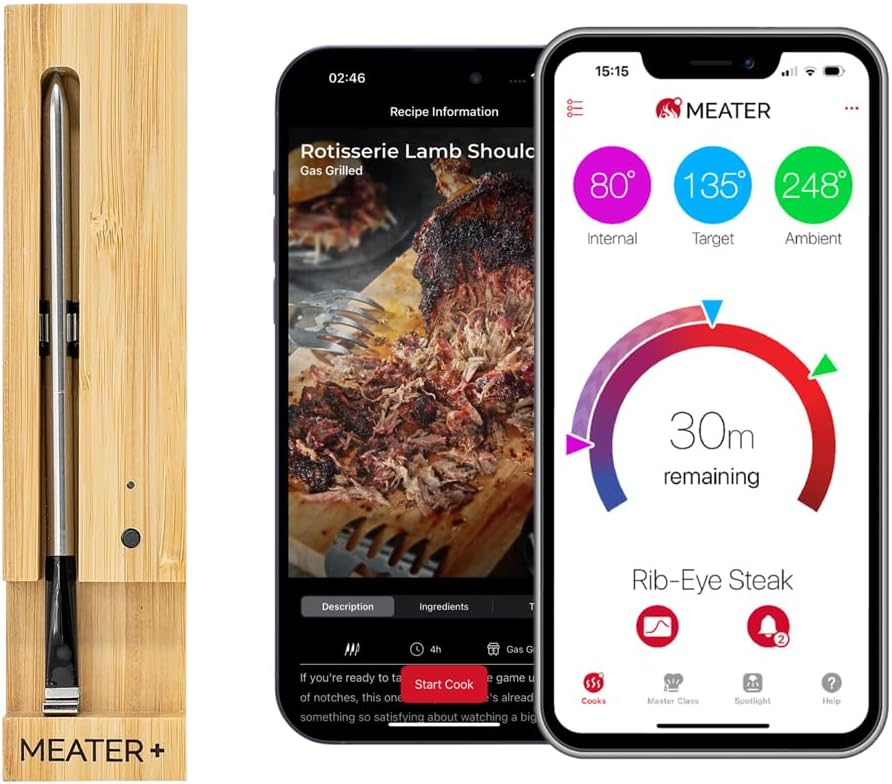
| Brand | MEATER |
| Special Feature | Timer, App Companion, High Accuracy, Programmable |
| Color | Bamboo |
| Age Range (Description) | Adult |
| Included Components | 1 Probe, 1 Bamboo Charger, 1 AAA battery |
| Outer Material | Stainless Steel |
| Specification Met | CE, FCC, RoHS |
| Display Type | Digital |
| Connectivity Technology | Bluetooth 4 |
| Product Care Instructions | Freezer Safe, Do Not Soak, Wipe Clean |
No wires, app-connected, sleek design.
Budget-Friendly: Kizen Digital Meat Thermometer
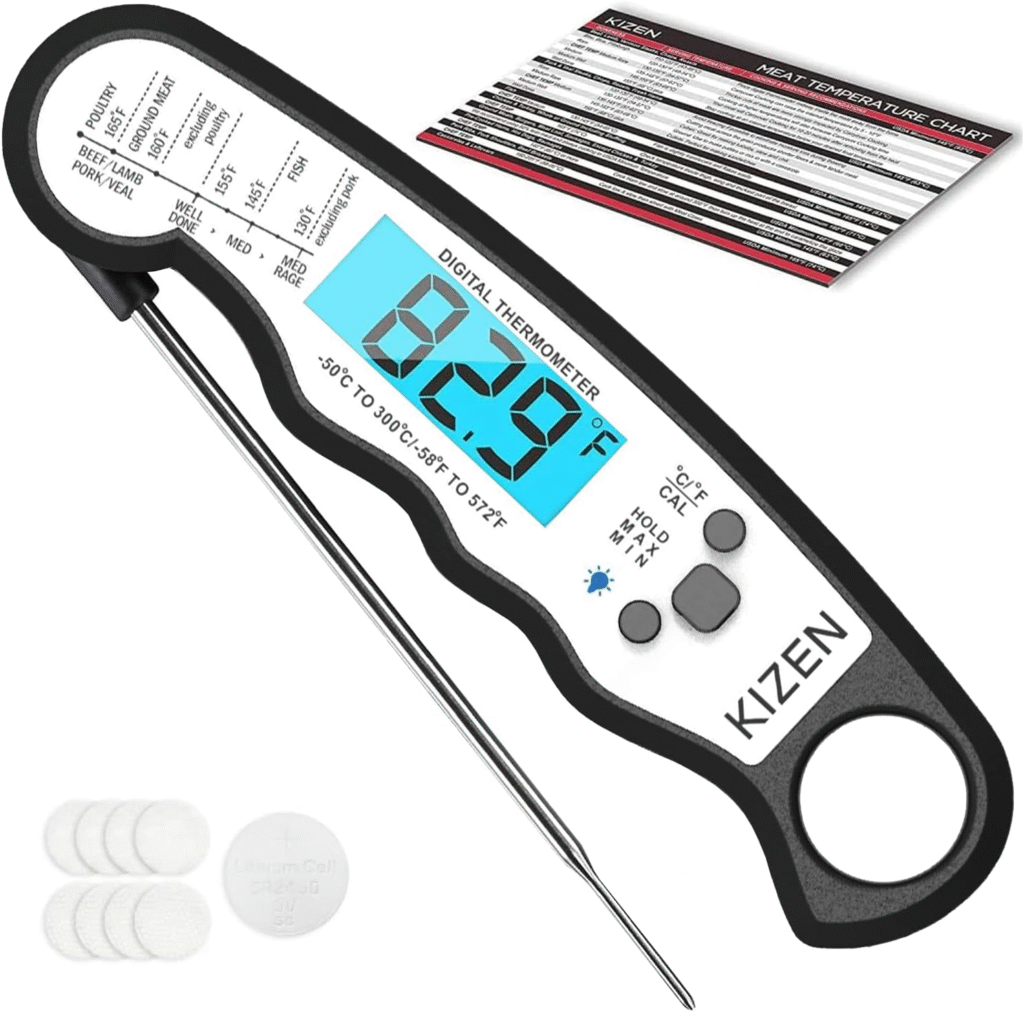
| Brand | KIZEN |
| Special Feature | Large Display, Waterproof, Ultra Clear Screen, Fast Reading System, High Accuracy |
| Color | Black/White |
| Age Range (Description) | Adult |
| Included Components | Battery, Instruction Guide |
| Outer Material | Plastic/Silicone |
| Specification Met | CE, RoHS |
| Display Type | Digital |
| Product Care Instructions | Do Not Soak, Hand Wash Only |
| Unit Count | 1 Count |
Affordable, quick, and reliable.
🤔 Choosing the Right Meat Thermometer for You
Based on Cooking Style
- Grilling? Go instant-read.
- Smoking? Use a probe or wireless.
- Roasting? Leave-in is your friend.
Based on Experience Level
Newbie? Get something simple and digital.
Techie? Go for smart features and app integrations.
🎯 Grilling Like a Pro: Thermometer Hacks
Two-Zone Cooking and Temp Control
Keep one side of the grill hotter. Cook low, then sear for perfection.
Using Multiple Probes
Track different meats—or different areas—at the same time.
Monitoring Ambient Grill Temp
Some wireless thermometers also track grill temp so you stay in control.
🍰 Thermometers Aren’t Just for Meat
Using Them for Baking
Check bread doneness (190–200°F inside) without cutting it open.
Checking Oil for Frying
Ideal frying temp: 350–375°F. A thermometer keeps it precise.
🧪 The Science Behind Cooking Temperatures
Why Internal Temp Matters More Than Grill Temp
Your grill could be blazing, but if the inside of your steak is raw? You’ve missed the mark.
Understanding Protein Structure and Doneness
As meat cooks, proteins tighten and moisture shifts. The thermometer lets you hit that perfect zone of juicy and tender.
👨🍳 Expert Advice from Grill Masters
Quotes and Advice from Real BBQ Champions
“If you’re not cooking to temp, you’re just guessing.” – Mark, Pitmaster Champion
“A $20 thermometer is worth more than a $200 cut of meat if it means not screwing it up.” – Chef Lana
Lessons from Competition BBQ
In competitive BBQ, thermometers are non-negotiable. Timing is second to accuracy.
✅ Conclusion
Grilling isn’t about luck—it’s about precision, practice, and knowing when to trust your tools. A meat thermometer is the grill master’s best-kept secret that turns guesswork into greatness. Once you get the hang of it, you’ll never go back.
You’ll taste the difference if you use a thermometer instead of relying solely on guesswork the next time you’re working at the grill.
❓FAQs
1. How deep should I insert a meat thermometer?
Insert it into the thickest part of the meat, about halfway through.
2. Can I cook with my meat thermometer in place?
Only if it’s a leave-in model! Instant-reads should not stay in during cooking.
3. How do I know if my thermometer is accurate?
Use boiling water (212°F at sea level) or ice water (32°F) to test it.
4. Is a digital thermometer better than an analog one?
Yes—digital thermometers are generally faster and more accurate.
5. Do I need a meat thermometer if I grill often?
Absolutely. It’s the best way to ensure consistent, delicious results every time.