Introduction
Why Choosing the Right Cutting Board Matters
You may think a cutting board is just a flat surface for chopping veggies—but it’s way more than that. The right cutting board can protect your knives, keep your food safe, and even add a touch of style to your kitchen.
Overview of Common Cutting Board Materials
The most popular options? Wood, plastic, and bamboo. Each has advantages, disadvantages, and best applications. Let’s dive deep into these materials to help you choose the best cutting board for your needs.
Wooden Cutting Boards
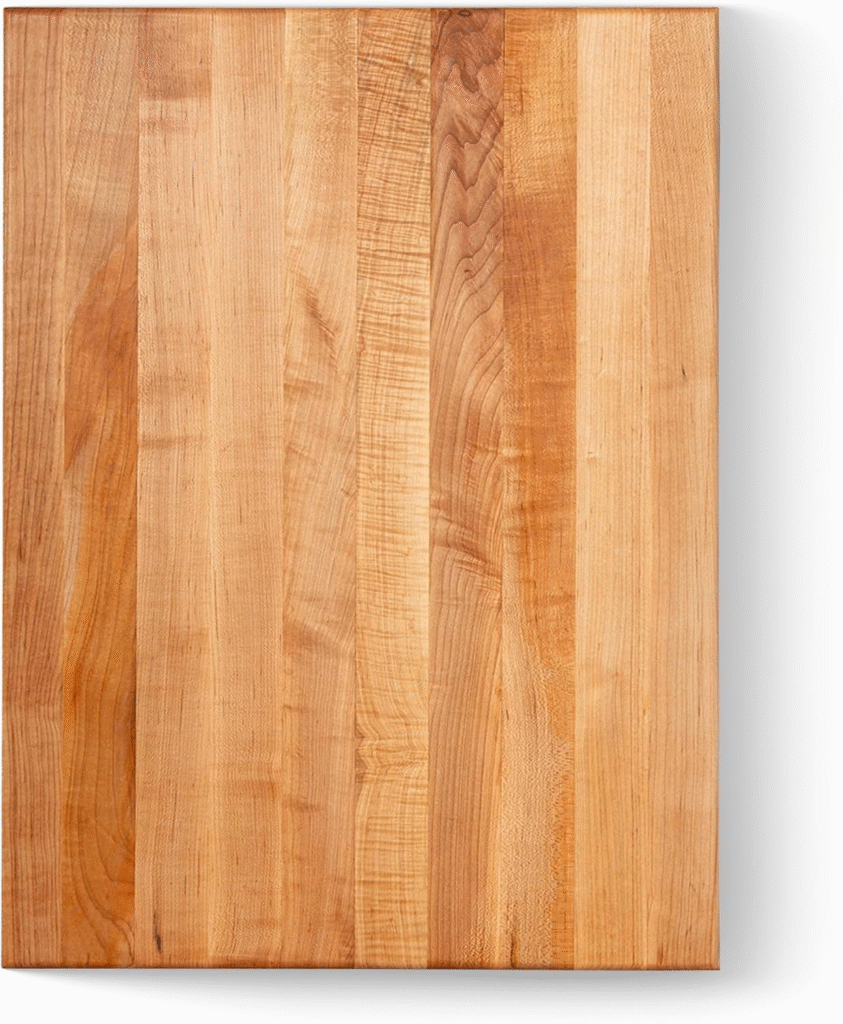
Types of Wood Used
Maple
Maple is a favorite in North American kitchens. It’s dense, durable, and doesn’t scar easily—perfect for everyday use.
Walnut
Walnut boards are not just functional but beautiful. They’re a bit softer than maple, which means they’re gentler on knives but may dent more easily.
Teak
Teak is an exotic wood known for its natural oils that repel water. That means fewer chances for bacteria to hide.
Pros of Wooden Boards
- Gentle on knives
- Durable and long-lasting
- Rich, natural appearance
- Self-healing surface minimizes deep grooves
Cons of Wooden Boards
- Requires regular oiling
- Not dishwasher safe
- Can warp if not dried properly
Best Use Cases for Wooden Boards
Perfect for fruits, vegetables, bread, and cooked meats. Avoid using them for raw meats due to porous surfaces.
Maintenance Tips
Oil them monthly with food-grade mineral oil, and never soak in water. Hand-wash only.
Plastic Cutting Boards
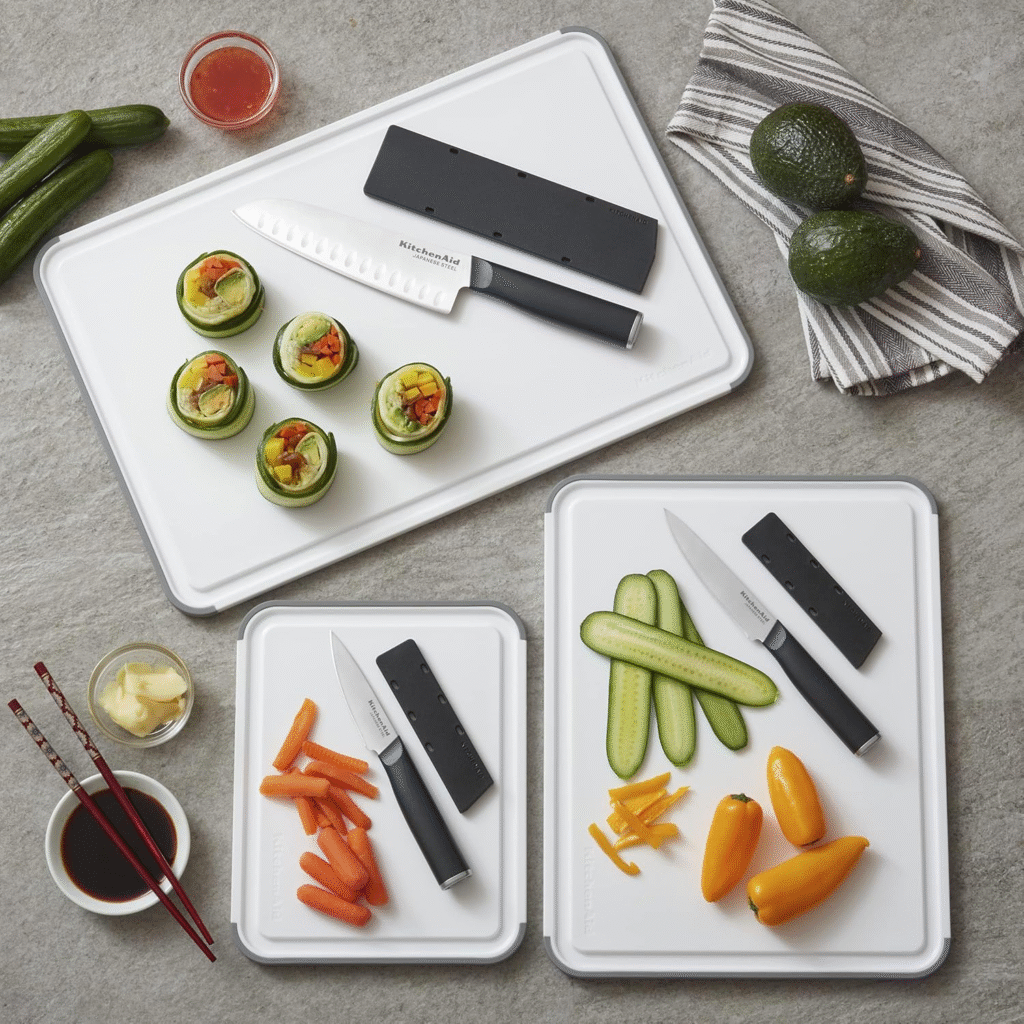
Different Types of Plastic
Polypropylene
This is the most common type—durable, lightweight, and often dishwasher safe.
Polyethylene
Slightly softer than polypropylene and commonly used in color-coded professional settings (like green for veggies, red for meat, etc.)
Advantages of Plastic Boards
- Dishwasher safe
- Affordable
- Lightweight
- Non-porous and hygienic
Disadvantages of Plastic Boards
- Scars easily, creating hiding spots for bacteria
- Less durable than wood or bamboo
- Not knife-friendly—dulls blades faster
Ideal Uses for Plastic Boards
Great for raw meat, poultry, and seafood due to easy sanitization.
How to Clean and Sanitize
Toss it in the dishwasher or wash with hot soapy water and sanitize with diluted bleach.
Bamboo Cutting Boards
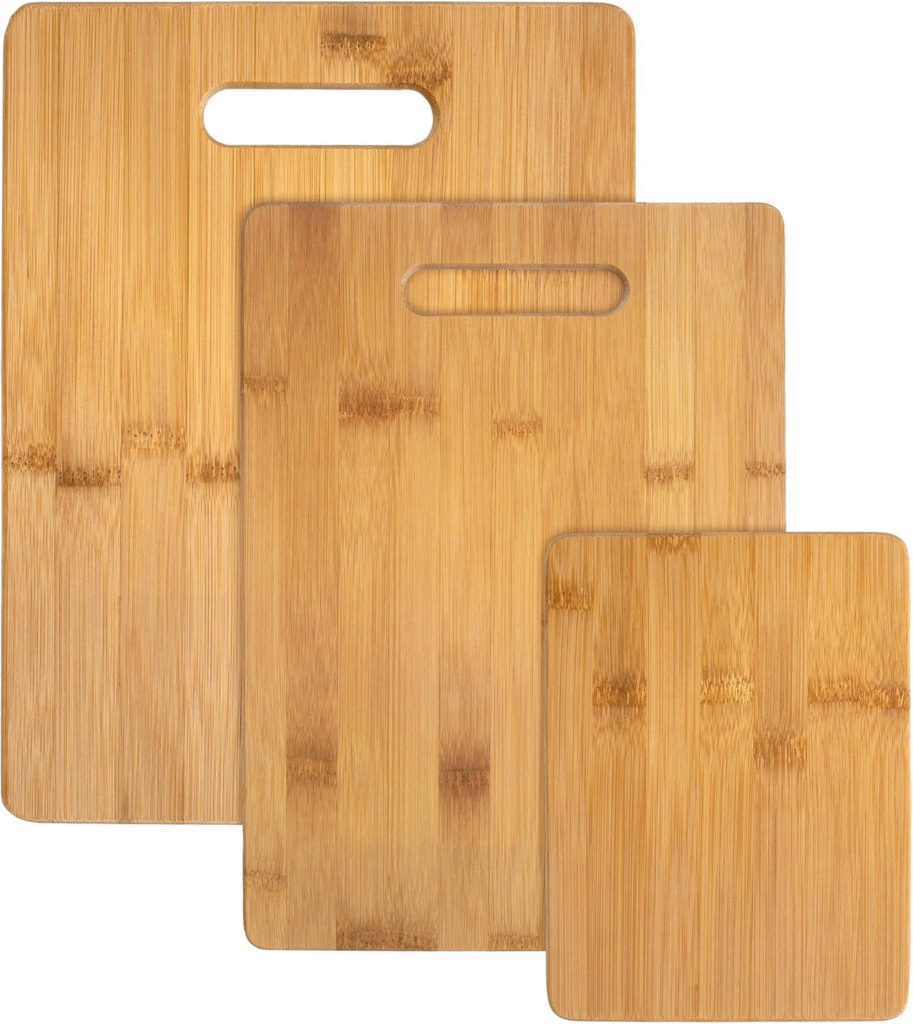
What Makes Bamboo Different?
Bamboo isn’t technically wood—it’s a grass! But it’s pressed and treated to make durable cutting boards.
Benefits of Bamboo Boards
- Eco-friendly and sustainable
- Lightweight but strong
- Naturally antimicrobial
- Less water absorption than wood
Drawbacks of Bamboo Boards
- Can be tough on knife edges
- Not dishwasher safe
- May crack if left wet
Best Practices for Bamboo Board Care
Hand-wash only and dry immediately. Apply mineral oil occasionally to maintain moisture resistance.
Comparison Table: Wood vs. Plastic vs. Bamboo
| Feature | Wood | Plastic | Bamboo |
|---|---|---|---|
| Durability | High | Medium | Medium-High |
| Knife-Friendly | Excellent | Poor | Fair |
| Hygiene | Good (if cared for) | Excellent | Good |
| Eco-Friendly | High | Low | Very High |
| Price Range | Medium-High | Low | Medium |
| Maintenance | High | Low | Medium |
Specialty Cutting Boards
Flexible Cutting Mats
These thin plastic mats are super handy for quick jobs and transferring chopped ingredients straight into the pot. They’re not very durable, though.
Glass Cutting Boards (Why to Avoid)
Sure, they look sleek—but they’re murder on your knives. The hard surface dulls blades quickly, and food slips easily.
Composite Boards
Made of resin-wood blends, they combine the durability of plastic with the aesthetics of wood. They’re pricey but a solid choice for professionals.
Factors to Consider When Choosing a Cutting Board
Usage Frequency
Daily users need something durable like hardwood or high-quality plastic.
Type of Food You Prepare
Raw meats? Go plastic. Veggies and bread? Wood or bamboo are better.
Budget
Plastic wins on affordability. Wooden boards are an investment but last longer with care.
Maintenance Willingness
Hate upkeep? Stick to plastic. Willing to put in some effort? Wood or bamboo will reward you.
Sustainability Concerns
Go bamboo or FSC-certified wood if you’re eco-conscious.
Recommendations for Every Kitchen Type
Home Cooks
A combo of one plastic and one wooden or bamboo board covers all your needs.
Professional Chefs
Multiple plastic boards for hygiene and at least one solid wood board for prep precision.
Eco-Friendly Kitchens
Bamboo all the way—sustainable, stylish, and strong.
Small Apartment Kitchens
Opt for a space-saving dual-sided plastic board with non-slip grips.
Conclusion
So, which one wins—wood, plastic, or bamboo? Honestly, it depends on your lifestyle. If you’re after hygiene and easy cleaning, plastic is a champ. Love aesthetics and knife care? Go wood. Want a sustainable, budget-friendly middle ground? Bamboo’s got your back.
Why not mix and match? Having more than one board in your kitchen isn’t just smart—it’s safe and efficient.
FAQs
1. Are wooden cutting boards safe for meat?
Not ideal. Wood is porous and can trap bacteria. Use plastic for raw meat.
2. Can I put plastic boards in the dishwasher?
Yes, most plastic boards are dishwasher safe. Check the label just to be sure.
3. Do bamboo boards dull knives?
They’re harder than wood, so yes—slightly. But it’s manageable with regular sharpening.
4. How many cutting boards should I have?
At least two: one for raw meats and one for everything else.
5. What’s the most hygienic cutting board material?
Plastic wins here—non-porous and easy to sanitize.